
Discount or manipulation? How stores bypass Omnibus rules.

Discount or Manipulation? How Stores Bypass the Omnibus Directive.
Discounts were supposed to become more transparent — that was the goal of the Omnibus Directive. In practice, however, many stores have found ways to present price reductions in a misleading way. Raising prices before promotions, limiting the comparison window to 30 days, or using coupons that only “offset” earlier increases are just some of the tactics. As a result, customers often see attractive deals that do not actually mean real savings.
Imagine this.
You see a product discounted from $799 to $275. There’s also a label: “lowest price in the last 30 days: $799”. It looks like a great deal.
You buy it.
A few days later, you discover that the same product used to cost… $399.
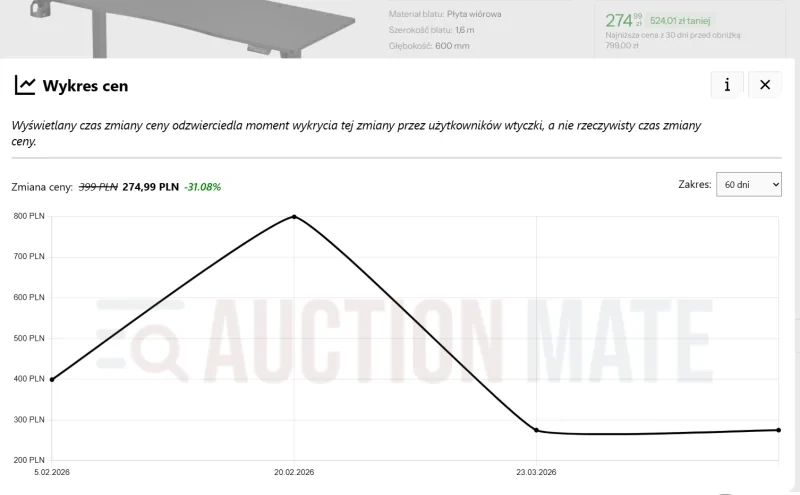
This is not an isolated case. Situations like this are becoming increasingly common.
The Omnibus Directive — in theory
The Omnibus Directive introduced a simple rule: when a product is on sale, the seller must show the lowest price from the last 30 days.
In theory, this should prevent artificial price inflation before discounts.
In practice, however, the regulation has limitations. It only applies to a short, 30-day window and does not reflect long-term price history. This creates room for manipulation.
How “discounts” really work
The pattern is surprisingly simple.
A product that used to cost $399 is increased to $799 shortly before a promotion. Then it is “discounted” to $275, with the store displaying $799 as the reference price.
For the customer, it looks like a great deal. In reality, the final price might be even higher than before.
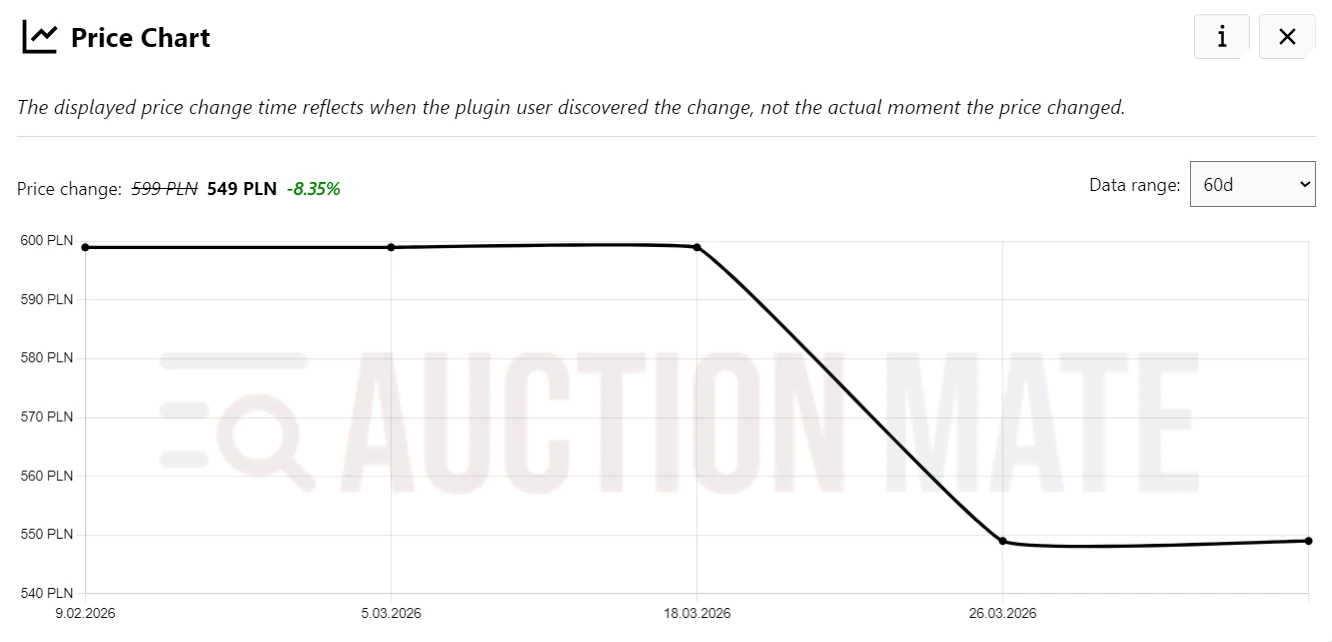
Similar cases have been widely shared online, including examples from the Polish market.
Coupons that “create” discounts
Another common tactic involves discount coupons.
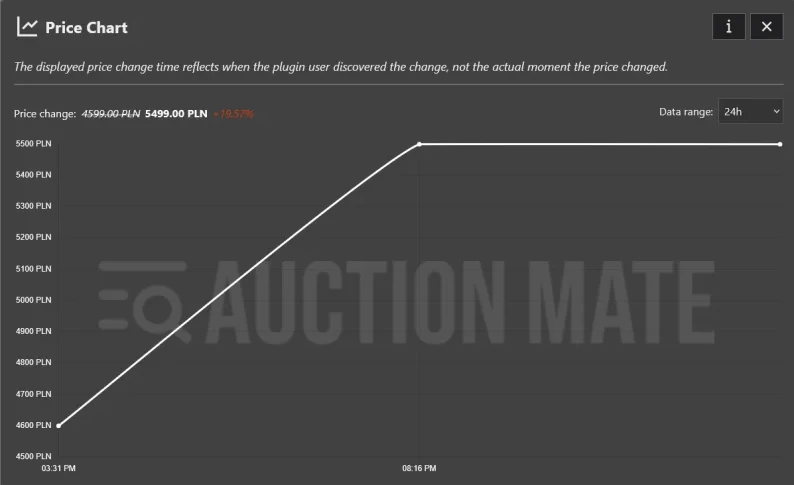
At first glance, the offer looks even better. The product costs 5499 PLN, but a ~1000 PLN coupon brings the price down to 4599 PLN.
In reality, this often only brings the price back to its previous level before the increase.
As a result, customers feel they are getting an extra deal, while the actual value remains unchanged.
Why it’s hard to notice
The issue is not a lack of information, but a lack of context.
Customers see the current price, a crossed-out price, and a discount label. Sometimes there is also a coupon. What they do not see is the full price history.
Without that context, it is difficult to judge whether a discount is real.
Not just a Polish issue
Although the example comes from the Polish market, the same mechanisms can be observed globally.
How to protect yourself
The key is to look at price history, not just the promotion.
How AuctionMate helps
AuctionMate allows you to track price changes over time and visualize them in a clear chart.
This makes it easy to see whether a price was previously lower, whether it was increased before a promotion, and whether a coupon actually adds value.
Discounts still work — but not always fairly
The Omnibus Directive improved transparency, but it did not eliminate all issues.
Today, simply seeing the “lowest price in 30 days” is not enough.
Smarter shopping requires a broader perspective — and access to real data.